Real Strategies vs. Casino Myths: A No-Nonsense Guide to Table Games
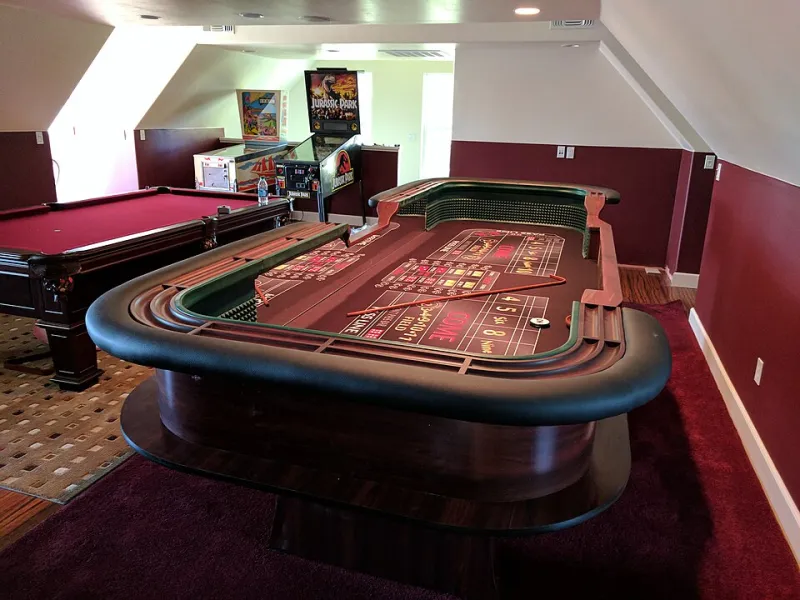
Photo: Americantablegames, CC BY-SA 4.0, via Wikimedia Commons
Ask ten people at a casino how to win at table games and you'll get ten different answers — some solid, some reasonable-sounding but completely wrong, and a few that are downright superstitious. The problem is that bad advice and good advice can sound almost identical if you don't know what to look for.
At One Casino, we're all about giving you the real picture. So we've done the homework: here are five strategies that are actually backed by math and game theory, followed by five myths you should retire immediately. Let's get into it.
✅ STRATEGIES THAT ACTUALLY WORK
1. Basic Strategy in Blackjack Is Non-Negotiable
If you're playing blackjack without a basic strategy chart, you're giving the house more edge than you need to. Basic strategy is a mathematically optimized set of decisions — when to hit, stand, double down, or split — based on your hand and the dealer's visible card.
This isn't a theory or a hunch. It's been calculated through millions of computer simulations. When followed correctly, basic strategy reduces the house edge in blackjack to roughly 0.5% or less, depending on the specific rules of the table. That's one of the best player edges available in any casino game.
You can find basic strategy charts freely online, and many casinos in the US will let you reference one at the table. There's no shame in using it — it's smart play.
2. Bankroll Management Is a Real Skill
This one applies across every table game, and it's not glamorous, but it works. Setting hard limits on how much you're willing to wager per session — and sticking to them — is one of the most effective tools a player has.
A common approach is the "percentage betting" method: never risk more than 1-5% of your total session bankroll on a single hand or spin. This extends your playtime, reduces variance, and keeps you in the game long enough to hit favorable runs when they come. It won't change the house edge, but it absolutely changes your ability to weather losing streaks without busting out early.
3. Understanding Poker Position Changes Everything
In poker — whether you're playing Texas Hold'em at a live table or in an online room — where you sit relative to the dealer button has a massive impact on your strategic advantage. Acting last in a betting round means you've seen what everyone else has done before making your decision. That's information, and information is power.
Playing tighter (fewer hands) from early positions and expanding your range from late positions like the button or cutoff is a foundational concept that serious players use consistently. It's not flashy, but it shifts the math in your favor over time.
4. In Roulette, Stick to Outside Bets
American roulette has a house edge of about 5.26% due to the double-zero pocket. European roulette cuts that nearly in half at around 2.7% with a single zero. If you have the choice, always opt for the European version.
Within the game itself, outside bets — red/black, odd/even, high/low — offer close to a 50/50 shot and are the most statistically rational wagers on the table. Inside bets (single numbers, small combinations) have massive payouts but correspondingly tiny probabilities. For players focused on longevity and controlled risk, outside bets are the mathematically sound choice.
5. Quitting While Ahead Is an Actual Strategy
This sounds obvious, but it's genuinely hard to execute in the moment. Setting a win limit — a point at which you'll walk away from the table regardless of how good the momentum feels — is a legitimate strategic decision backed by the math of regression to the mean.
Hot streaks end. That's not pessimism; it's probability. Locking in a profit by stepping away when you've hit your target is one of the few ways a player can actually guarantee a positive session outcome.
❌ MYTHS YOU SHOULD STOP BELIEVING
1. The Gambler's Fallacy: "I'm Due for a Win"
This is probably the most expensive myth in casino gaming. The idea that a losing streak makes a win more likely — or that a roulette wheel that's hit red seven times in a row is "due" for black — is a fundamental misunderstanding of probability.
Each spin, hand, or roll is statistically independent. The roulette wheel has no memory. The deck (in most casino games) doesn't know what it dealt last round. Past outcomes have zero influence on future ones in games of pure chance. Acting as if they do leads to irrational bets and unnecessary losses.
2. Card Counting Is Easy and Foolproof
Card counting in blackjack is a real technique with a real mathematical basis — but the movies have wildly overstated how accessible it is. Effective card counting requires significant practice, deep concentration, the ability to disguise your behavior from casino staff, and — critically — a large enough bankroll to survive the variance it introduces.
For the average recreational player at a US casino, attempting to count cards without extensive training is more likely to distract you from basic strategy (which is more impactful) than to give you any real edge.
3. Betting Systems Like Martingale "Beat" the House
The Martingale system — doubling your bet after every loss to eventually recover — sounds logical on paper. In reality, it runs into two brutal problems: table betting limits and finite bankrolls.
A string of consecutive losses (which happens regularly in any random game) will either exhaust your funds or push you into the table's maximum bet cap before you can recover. The math doesn't lie: no progressive betting system changes the underlying house edge. They redistribute risk, they don't eliminate it.
4. Slot Machines Near Table Games Pay More
This is pure folklore. Modern slot machines use random number generators (RNGs) that operate completely independently of their physical location on a casino floor. A machine by the entrance, next to a blackjack table, or in the back corner all run on the same programmed return-to-player percentages.
Casino layouts are designed for traffic flow and atmosphere, not to strategically place "hot" machines. Chasing location-based slot theories is a waste of time and chips.
5. Poker Is Mostly Luck in the Long Run
Flip this myth on its head: in the short run, yes, luck plays a significant role in poker. But over hundreds or thousands of hands, skill absolutely dominates. This is why the same names consistently appear at World Series of Poker final tables year after year.
Understanding pot odds, reading opponents, managing tilt, and making mathematically sound decisions consistently separates long-term winners from long-term losers. Believing poker is mostly luck is a convenient excuse — and it keeps players from putting in the work that actually improves their game.
The table is set. Now you know which moves are worth making and which ones are just costing you money. Whether you're a blackjack regular, a roulette dabbler, or a poker grinder, playing with accurate information is always your best bet. At One Casino, the game is always on — and now you're playing it smarter.